

Wayfinding Signs That Actually Work: Reducing Confusion In Offices, Campuses, And Retail
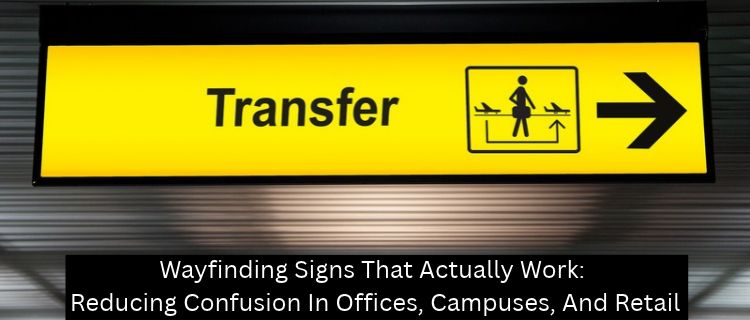
A visitor who can’t find the entrance, the right suite, or the nearest exit forms a bad impression before they even reach you. Wayfinding signage solves this quietly and effectively, guiding people through a space without them having to ask for directions. Good wayfinding isn’t just about putting up arrows — it’s about thinking through how people actually move through a building.
What Makes Wayfinding Signage Different From Regular Signs
It’s A System, Not A Single Sign
Unlike a storefront sign, wayfinding works as a connected series of signs that guide someone step by step from entrance to destination. One confusing or missing sign in the sequence breaks the whole experience.
It Follows The Path People Actually Take
Effective wayfinding is designed around real foot traffic patterns and decision points — not just where it’s convenient to mount a sign, but where someone actually needs guidance.
Common Places Wayfinding Signage Falls Short
Too Much Information At Once
Overloading a single sign with every possible direction creates hesitation instead of clarity. Wayfinding works best when each sign answers one decision at a time.
Inconsistent Design Across A Building
When directional signs use different fonts, colors, or icon styles throughout a facility, visitors lose the visual cues that would otherwise help them navigate intuitively.
Missing Signage At Key Decision Points
Confusion usually happens at intersections, lobbies, or elevator banks — the moments where someone has to choose a direction. Skipping signage at these points is where wayfinding systems typically fail.
Designing Wayfinding For Offices
Guiding Visitors From Entrance To Reception
Office wayfinding often starts before a visitor even reaches the front door, with exterior directional signs pointing toward the correct entrance or visitor parking.
Suite And Department Identification
Multi-tenant office buildings benefit from clear, consistent suite numbering and department signage, reducing the number of visitors who end up at the wrong door.
Designing Wayfinding For Campuses
Managing Large, Complex Layouts
School and corporate campuses often span multiple buildings, making a clear hierarchy of signage — from campus maps to building identification to room numbers — essential for new visitors.
Supporting Emergency And Accessibility Needs
Campus wayfinding also plays a safety role, helping people quickly locate exits, accessible routes, and emergency assembly points during high-stress situations.
Designing Wayfinding For Retail
Directing Shoppers Without Overwhelming Them
In retail environments, wayfinding needs to balance clear navigation with the store’s overall design, using directional signage that guides shoppers to departments or checkout without cluttering the space.
Reinforcing Brand Identity Along The Way
Well-designed wayfinding in retail settings can double as a branding opportunity, using consistent colors and typography that reinforce the store’s identity throughout the customer journey.
Building A Wayfinding System That Lasts
Planning For Future Changes
Modular wayfinding systems allow individual signs — like tenant names or department labels — to be updated without replacing the entire system when changes occur.
Working With One Team From Design To Installation
A cohesive wayfinding system works best when one company designs, fabricates, and installs the entire package, ensuring consistency across every sign in the building.
FAQ
What’s The Difference Between Wayfinding And Directional Signage?
Wayfinding refers to the entire system guiding someone through a space, while directional signs are individual components within that system.
How Many Wayfinding Signs Does A Typical Office Need?
It varies by building size and layout, but most offices need signage at entrances, major intersections, and department or suite entry points.
Can Wayfinding Signage Be ADA Compliant?
Yes, and in many buildings it’s required to be, particularly for room identification and accessible route signage.
How Often Should Wayfinding Systems Be Updated?
Updates are typically needed when tenants change, departments move, or a building undergoes renovation.
Does Wayfinding Signage Need To Match A Company’s Branding?
It doesn’t have to, but incorporating brand colors and fonts creates a more cohesive, professional look throughout the space.
Effective wayfinding signage disappears into the background by doing its job well — visitors simply find where they’re going without confusion or frustration. Whether it’s an office, campus, or retail space, a thoughtfully designed wayfinding system pays off in fewer lost visitors and a smoother experience for everyone who walks through the door.
Back