
Sign Shop Services Explained: From Design To Installation
Most business owners know they need a sign — but few understand everything that goes into creating one. A professional sign shop is far more than a printing facility. It is a full-service creative and manufacturing operation that takes a concept through design, engineering, material selection, fabrication, finishing, permitting, and installation. Understanding what happens behind the scenes helps you communicate more effectively with your sign company and make smarter decisions throughout the project. Here is a complete walkthrough of what professional sign shop services actually include.
The Design Phase: Turning Your Brand Vision Into A Workable Blueprint
Concept Development, Proofing, And Client Approval Workflows
Every sign starts with a design conversation. A professional sign shop will ask about your brand identity, intended location, viewing distance, and budget before producing a single concept. Armed with this information, an in-house designer creates initial layouts — typically presented as digital mockups showing the sign in context on your building or vehicle.
Client review cycles are standard. Most shops allow two to three revision rounds before locking in a final approved design. During this phase, the designer also accounts for technical constraints: letter heights must be legible at the viewing distance, colors must be achievable in the chosen material, and the layout must conform to any local sign ordinances affecting size or lighting.
Once approved, the design file is converted into production-ready files — vector artwork for cut vinyl, print files for digital graphics, or engineering drawings for fabricated dimensional letters.
Fabrication, Finishing, And Professional Sign Installation
Manufacturing Processes, Quality Control, And Post-Installation Support
Sign fabrication varies dramatically by sign type. Simple vinyl signs use wide-format digital printers and precision cutting plotters. Dimensional letter sets require CNC routing or metal fabrication. Channel letter signs involve welding aluminum returns, applying translucent faces, and wiring LED modules inside each letter. Each process has its own quality control checkpoints.
Finishing includes painting, laminating, applying protective coatings, or adding anti-graffiti film. Quality laminates protect printed graphics from UV fading and physical abrasion, significantly extending the lifespan of outdoor signs in harsh St. Louis weather conditions.
Permit acquisition is a service many shops offer. For most exterior commercial signs, a permit application must be filed with the city or county, often requiring scaled drawings and approval from planning departments. An experienced sign company navigates this process efficiently, reducing delays.
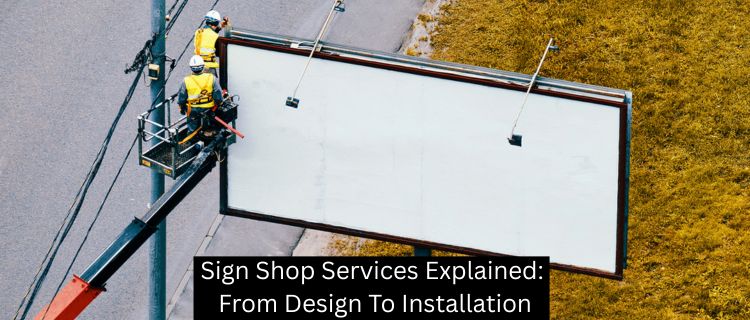
Installation is the final and most visible step. Professional sign installers use appropriate anchoring systems for each surface type — masonry, metal cladding, wood framing, or glass. Post-installation inspection ensures the sign is level, secure, fully illuminated if applicable, and meets all relevant safety codes. Reputable shops offer a warranty period covering defects in materials and workmanship.
Key Points At A Glance
| Service Stage | What Happens at This Step |
| Discovery & Consultation | Brand review, site survey, goal-setting, and budget alignment |
| Design & Proofing | Concept creation, digital mockups, revision rounds, client approval |
| Permit Application | Filing with local authority, submitting drawings, tracking approval |
| Fabrication | Manufacturing using CNC routing, printing, welding, or LED wiring |
| Finishing & QC | Painting, laminating, testing illumination, quality inspection |
| Installation & Warranty | Professional mounting, leveling, final inspection, warranty coverage |
Further Reading For Business Owners
→ Our Sign Design Process at Horizon Sign Co.
→ Permitting Guide for St. Louis Commercial Signs
→ Schedule Your Sign Shop Consultation Today
Frequently Asked Questions
Do I Need To Provide My Own Design For A Sign?
No. Full-service sign shops like Horizon Sign Co. provide in-house design services. If you have existing brand files such as a logo in vector format, sharing them helps, but it is not required to start the design process.
How Many Revision Rounds Are Typically Included In Design?
Most professional sign companies include two to three revision rounds in their standard pricing. Additional revisions beyond that may incur a small design fee, which should be clarified upfront in your project agreement.
Who Handles The Sign Permit — Me Or The Sign Company?
Reputable sign companies handle permit applications on your behalf. They prepare the necessary drawings, submit the application, and follow up with the permitting office. You may need to sign authorization documents during this process.
What Warranties Do Sign Companies Typically Offer?
Standard warranties cover manufacturing defects in materials and workmanship, typically ranging from one to three years. Electrical components like LED modules often carry separate manufacturer warranties of five years or more.
Can The Sign Company Install On Any Type Of Building Surface?
Experienced installers work with masonry, metal, glass, wood, and EIFS surfaces. Each requires different anchoring methods and hardware. Always confirm your specific wall construction with the sign company before installation day.
Understanding the full sign shop process empowers you to be a better project partner and avoid common misunderstandings. From the first design conversation to the final bolt in your building facade, every step matters. Horizon Sign Company. Manages the entire journey — design, permitting, fabrication, and installation — under one roof, so you can focus on running your business while we handle every detail of your signage project. Reach out today to learn what a full-service sign shop can do for your brand.
Back