
ADA Braille Signs: Staying Compliant While Keeping Your Signage On-Brand
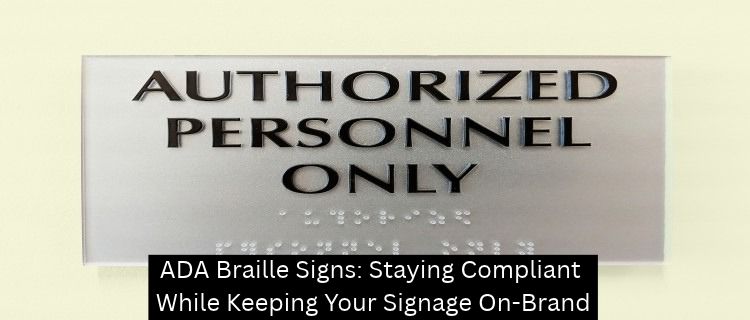
ADA-compliant signage isn’t optional for most commercial buildings, but that doesn’t mean it has to look like a generic, off-the-shelf label. Restroom signs, room numbers, and directional signage can meet strict accessibility requirements while still matching your brand’s colors, fonts, and overall look.
Understanding What ADA Signage Actually Requires
Braille And Raised Character Standards
ADA guidelines specify precise requirements for character height, raised text depth, and Grade 2 braille placement, ensuring signage is usable for people with visual impairments. These aren’t flexible design suggestions — they’re measurable compliance standards.
Contrast And Finish Requirements
Signage must maintain sufficient contrast between text and background, and finishes are typically required to be non-glare to remain legible under various lighting conditions.
Mounting Height And Location Rules
ADA signage has specific requirements for mounting height and placement relative to doors, which affects both usability and legal compliance if inspected.
Why Compliance Matters Beyond Avoiding Fines
Legal Risk For Non-Compliant Buildings
Non-compliant signage can expose property owners and businesses to complaints or legal action, particularly in commercial and public-facing buildings subject to regular inspection.
Genuine Accessibility For Customers And Employees
Beyond the legal requirement, properly designed ADA signage ensures employees, customers, and visitors with visual impairments can navigate a space independently and safely.
Making ADA Signage Match Your Brand
Custom Colors Within Compliant Contrast Ratios
Brand colors can often be used as long as the contrast ratio between text and background meets ADA standards — a good sign company will calculate this rather than defaulting to plain black and white.
Consistent Fonts And Logo Placement
While the braille and raised text elements follow strict formatting rules, surrounding design elements like logos or accent colors can still echo your broader signage package.
Material And Finish Choices
ADA signs come in various materials, from acrylic to metal-look laminates, allowing some flexibility to match the overall aesthetic of a lobby, office, or retail space without sacrificing compliance.
Common Applications For ADA Braille Signage
Restroom And Room Identification
Restroom signs are among the most commonly required ADA signs, needing both raised characters and braille alongside standard pictograms.
Wayfinding And Directional Signage
Larger facilities like offices, schools, and medical buildings often need ADA-compliant directional and room identification signage throughout, tying into a broader wayfinding system.
Suite And Office Numbering
Multi-tenant buildings typically require ADA-compliant suite numbers at each entry point, which can still be designed to match the building’s overall signage program.
Working With An Experienced Sign Company
Avoiding Costly Redesigns
A sign company familiar with ADA requirements will catch potential compliance issues during design, before signs are fabricated and installed, avoiding expensive reprints.
One Vendor For Compliance And Branding
Working with a full-service provider like Horizon Sign Company means ADA signage and the rest of your interior or exterior signage program can be designed together, keeping everything visually consistent.
FAQ
Is ADA Signage Legally Required For All Businesses?
Most commercial buildings open to the public are required to have compliant signage, particularly for restrooms and room identification.
Can ADA Signs Be Customized To Match My Brand Colors?
Yes, as long as the contrast ratio between text and background meets ADA standards.
What’s The Difference Between Grade 1 And Grade 2 Braille?
Grade 2 braille, which uses contractions, is the required standard for ADA-compliant signage.
Where Should ADA Signs Be Mounted?
ADA guidelines specify mounting height and placement relative to door frames, which a compliant sign company will follow precisely.
Do Existing Signs Need To Be Replaced To Meet Current ADA Standards?
If existing signage doesn’t meet current character, braille, or mounting requirements, replacement is typically necessary to stay compliant.
ADA Braille signage doesn’t have to mean sacrificing your brand’s look for the sake of compliance. With the right design approach and an experienced sign company, restroom signs, room numbers, and wayfinding signage can meet accessibility requirements while still feeling like a natural part of your overall space. Horizon Sign Company can help you create ADA-compliant signage that fits your brand and environment. Contact us today to discuss your signage needs.
Back