
Menu Boards That Improve Customer Experience And Increase Sales
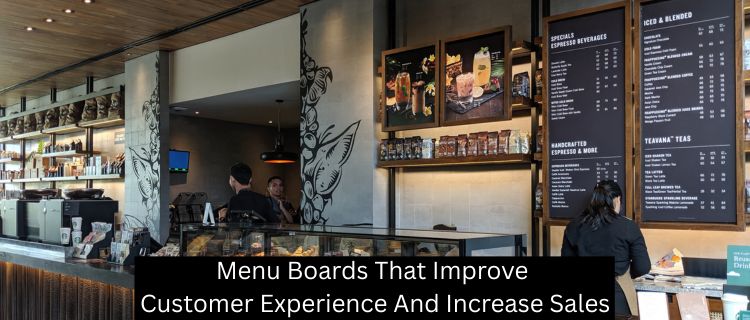
A restaurant menu board is far more than a list of items and prices. It is a sales tool, a communication channel, and a brand expression — all in one. A well-designed menu board guides customers through their purchasing decision quickly and confidently, which reduces perceived wait times, increases average order values, and builds overall satisfaction. Whether you run a quick-service restaurant, a coffee shop, or a food truck in St. Louis, upgrading your menu board can meaningfully improve your bottom line.
The Psychology Behind High-Performing Menu Board Design
Visual Hierarchy, Item Placement, And Strategic Upselling
Research on restaurant consumer behavior consistently shows that customers spend under two minutes reading a menu board before ordering. In that time, your board must guide their attention to your most profitable and most popular items. Visual hierarchy — achieved through size contrast, color accents, and strategic whitespace — directs the eye to featured items before the customer even realizes they are being guided.
Item placement follows the concept of “visual anchoring.” Items placed in the top-right quadrant of a menu board receive disproportionate attention, a phenomenon food service consultants call the sweet spot. Placing your highest-margin item there, along with a supporting photo or callout graphic, reliably increases its order rate.
Limited menus outperform sprawling ones. Too many choices cause decision fatigue, slowing down the ordering process and frustrating customers. High-performing quick-service operators typically display no more than six to twelve items per category, using strategic grouping to make navigation effortless.
Menu Board Types And Technology: Static, Printed, And Digital Solutions
Choosing The Right Board For Your Venue And Budget
Traditional static menu boards — printed on aluminum panels or coroplast — remain a cost-effective option for operators with a stable menu. They are durable, easy to install, and require no technical maintenance. High-resolution printing at 1200 DPI or higher produces sharp, appetizing food photography that brings items to life.
Chalkboard-style menu boards have experienced a resurgence in artisan coffee shops and craft food venues, offering a handcrafted, personalized aesthetic that resonates with specific demographics. Custom chalkboard panels can be designed with permanent framing and interchangeable sections for specials and seasonal items.
Digital menu boards represent the premium end of the spectrum. LED display panels controlled by a content management system allow operators to update pricing, add limited-time offers, schedule daypart-specific menus, and display dynamic content including video loops and animated graphics. For multi-location operators, a cloud-based CMS allows menu updates across all locations simultaneously. The upfront investment is higher, but the flexibility and operational efficiency often justify the cost within the first year.
Key Points at a Glance
| Menu Board Type | Best Use Case & Key Advantage |
| Static Aluminum Panel | Stable menus; durable, low-maintenance, cost-effective |
| Backlit Lightbox Panel | Enhanced visibility in dim environments; brighter food photography |
| Chalkboard Style | Artisan or craft venues; handcrafted appeal, flexible specials section |
| Digital LED Display | Dynamic pricing and daypart menus; remotely updatable content |
| Drive-Thru Menu Boards | Outdoor weatherproof displays optimized for fast vehicle reads |
| Menu Board Stands | Food trucks and pop-ups; portable, lightweight, easily repositioned |
More Resources from Our Team
→ Custom Menu Board Design for Restaurants in St. Louis
→ Digital Sign Solutions for Food Service Businesses
→ Contact Horizon Sign Co. for a Menu Board Estimate
Frequently Asked Questions
How Do Menu Boards Help Increase Average Order Value?
Strategic item placement, high-quality food photography, and promotional callouts naturally guide customers toward higher-value items and combos. Effective boards consistently improve upsell rates without any additional staff effort.
What Resolution Is Needed For Menu Board Food Photography?
For high-impact printed menu boards, food photography should be prepared at minimum 150 DPI at final print size. For digital screens, images should match the display resolution, typically 1920×1080 pixels or higher for modern LED panels.
How Long Does It Take To Design And Install A Menu Board?
Simple printed menu boards can be designed and installed within five to ten business days. Custom digital setups involving multiple screens, mounting hardware, and content management configuration typically take two to four weeks.
Can Existing Menu Boards Be Updated Without Full Replacement?
Yes. Many framed menu board systems accept replacement print panels. This allows operators to refresh pricing or seasonal items at a fraction of the cost of full board replacement. Ask your sign company about panel-only update options.
Are Drive-Thru Menu Boards Different From Indoor Boards?
Yes. Drive-thru boards must withstand weather exposure, use larger text for fast reading from a moving vehicle, and are often positioned at specific heights regulated by local codes. Outdoor-rated materials and sealed electronics are essential.
A great menu board is one of the most cost-effective improvements a food service business can make. It operates silently around every customer interaction, influencing purchasing decisions without requiring any additional staff involvement. Horizon Sign Company. designs and installs menu boards for St. Louis restaurants, cafes, and food trucks — from simple printed panels to sophisticated multi-screen digital systems. Let us help you build a menu display that serves your customers and grows your sales simultaneously.
Back